
You’ve paid good money for your static caravan – so it’s only natural to wonder how many years of use you’ll actually get out of it, and whether the park’s age limit will cut short its useful life long before it wears out. The honest answer is that a well-maintained static caravan can last 20–30 years or more, yet some will spend only 10–15 years on a pitch before a park’s replacement policy forces the issue. Understanding what drives that range – and how to stay on the right side of it – is what this guide is for.
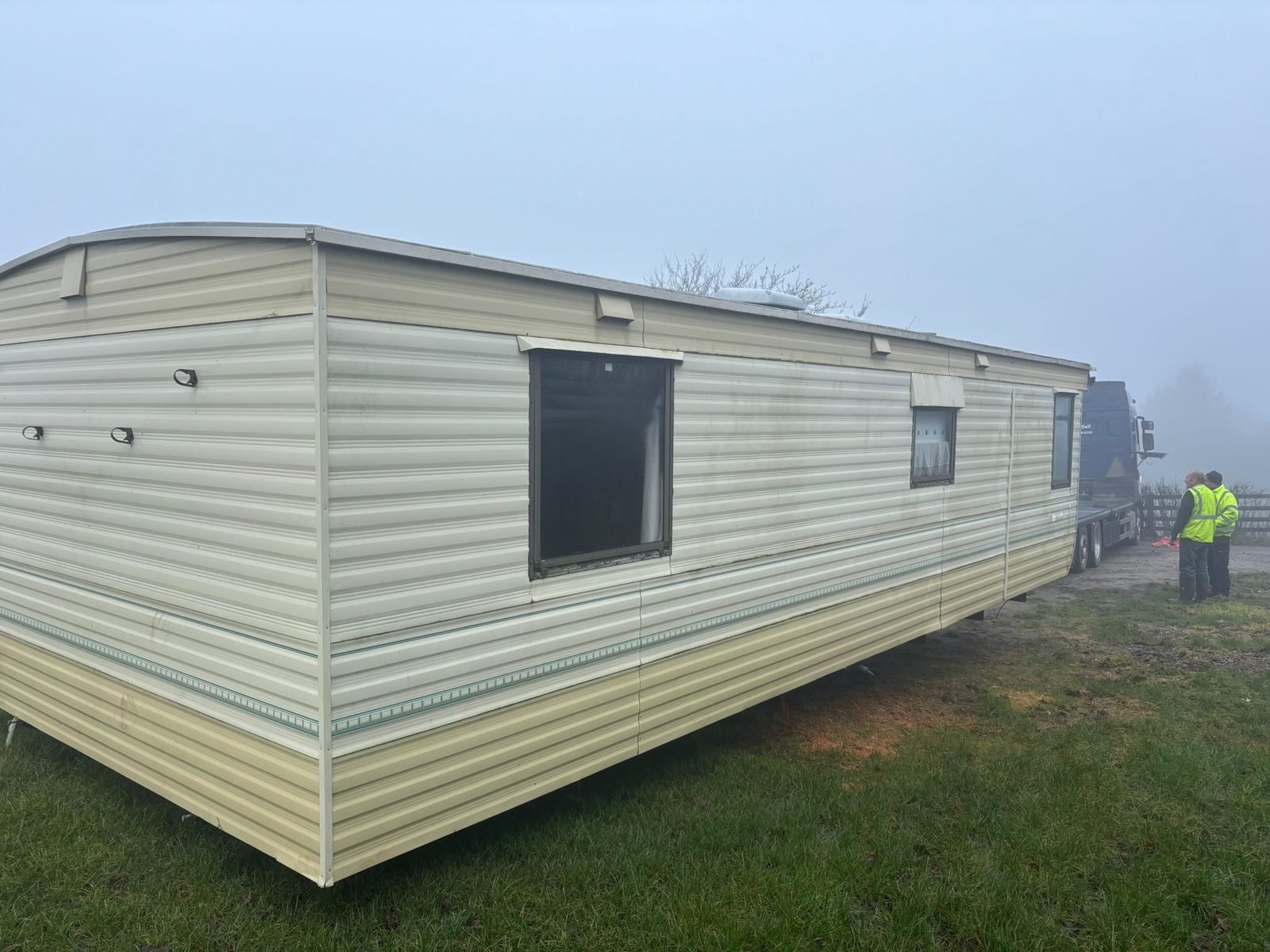
What Is the Typical Lifespan of a Static Caravan?
Most industry sources agree on a range of 20–30 years for a static caravan that has been looked after consistently. Some owners are still using units that are 35–40 years old, while others see serious deterioration inside 15 years due to neglect or persistent damp. There is no single cut-off point written into law; the physical life of the unit and the licence terms on your pitch are two entirely separate things.
Build quality matters enormously here. A caravan constructed on a galvanised steel chassis, with solid timber framing and robust external cladding, starts with a significant advantage over a budget model. That said, even the best-built unit will deteriorate quickly if water finds a way in and is left unchecked.
The Two Lifespans You Need to Know About
When people ask how long a static caravan lasts, they are often conflating two very different questions. It is worth separating them clearly:
| Lifespan type | What it means | Typical range |
|---|---|---|
| Physical lifespan of the unit | How long the structure, frame and fittings remain serviceable with normal upkeep | 20–30+ years |
| Pitch licence term / park age limit | How long the park will allow that unit to remain on the pitch before requiring replacement | 10–20 years (varies by park) |
Holiday parks (seasonal use, not covered by BS 3632) tend to impose stricter age limits – commonly 10–15 years – partly to maintain the appearance of the site and partly to drive new sales. Residential parks, where homes are built to BS 3632 and residents may live year-round, often allow units to remain for longer, because the legal framework around residential park homes gives occupiers stronger protections. It is always worth reading your pitch licence carefully before you buy – or before you invest in a major refurbishment of an older unit.
What Shortens a Static Caravan’s Life?
The single biggest enemy of a static caravan is water ingress. Once damp gets into the floor or walls and sits there, it causes timber rot, mould, and structural softening that quickly becomes expensive – or terminal. Other factors also play a role:
- Failed roof and window seals – UV exposure causes sealant to crack and shrink over time; even a small gap around a skylight or window frame can allow significant water ingress over a winter.
- Coastal location – salt air accelerates corrosion on the chassis, roof fixings and external metalwork; units near the sea need more frequent washing and protective treatment.
- Neglected gutters and drainage – blocked gutters cause overflow that pools against the base, eventually wicking into the floor.
- Poor ventilation – condensation building up inside a closed-up unit during the off-season encourages mould in walls, ceilings and soft furnishings.
- Infrequent use combined with no winterisation – a caravan left standing with water in the pipes through a hard frost can suffer burst pipes and water damage. See our guide to winterising a static caravan for a full checklist.
- Poor levelling – a unit that is not properly level puts uneven stress on the frame, doors and windows, leading to gaps and distortion over time. This matters when it is first sited, and again if it is ever moved and re-sited.
What Extends a Static Caravan’s Life?
Routine maintenance is the clearest lever owners have over how long their caravan lasts. The following habits make a measurable difference:
- Annual roof inspection and re-sealing of any joints, seams or skylights that show cracking.
- Checking all window and door rubber seals each spring and replacing any that have hardened or split.
- Keeping gutters clear of leaves and debris, particularly through autumn.
- Treating the external timber or UPVC cladding as recommended by the manufacturer.
- Leaving roof vents slightly open during the off-season to prevent condensation build-up.
- Ensuring the unit remains correctly levelled – if it has shifted on its stands, get it re-levelled promptly.
- Checking the chassis for surface rust annually and treating any spots before they spread.
A caravan that receives this level of attention every year has a realistic chance of remaining in sound structural condition at the 25–30 year mark. One that is left unvisited for long stretches without proper preparation can show serious deterioration in half that time.
Park Age Limits: What Happens When You Hit the Limit?
If your park has a maximum unit age of, say, 15 years, you will typically receive notice in advance of that date requiring you either to purchase a replacement from the park or to remove your existing caravan. This is one of the most common reasons people contact us – a caravan that is physically perfectly sound has simply exceeded the park’s permitted age.
In that situation, your options are broadly:
- Replace the unit in situ with a new or newer caravan on the same pitch.
- Move the existing caravan to a different park with a more generous age policy, or no age limit.
- Move it onto suitable private land if planning permission allows.
- Sell it for use on a site where it is still within the permitted age.
Options 2, 3 and 4 all potentially involve a move. Our guide on moving a static caravan to another site covers the rules and practicalities in detail – and our guide on when rising pitch fees make moving worthwhile looks at the financial side. If the park is closing altogether, see our separate guide on moving after a site closure or eviction.
Is It Worth Moving an Older Static Caravan?
This is a question we are often asked. The short answer is: it depends on the structural condition of the unit and what you plan to do with it next. A 20-year-old caravan that has been well maintained, has no soft floors, no rot in the frame and a sound roof, is perfectly worth moving – transport costs are the same regardless of the unit’s age.
A caravan with significant structural damage is a different matter. If the floor has softened or the chassis is badly corroded, a move may worsen existing damage, and the cost of transporting plus repairing may exceed what the unit is worth.
If you are unsure, have the unit assessed before committing to a move. Our guide to buying a second-hand static caravan includes a condition checklist that is equally useful for assessing an existing unit before a move.
Transport for a standard single-unit static caravan starts from £950, with de-siting and re-siting typically adding £300–£1,200 depending on the work involved. Larger or twin-unit homes can be significantly more. See our full UK price guide for moving a static caravan for a detailed breakdown.
Holiday Home vs Residential Home: Does Build Standard Affect Lifespan?
Yes – and it is worth understanding the distinction if you are buying or planning a long-term move. Holiday static caravans are built to EN 1647, a European leisure standard. Residential park homes are built to the British Standard BS 3632, which requires higher levels of insulation, more robust construction and suitability for year-round occupation.
A BS 3632 home is generally a more substantial structure and, all else being equal, tends to have a longer effective lifespan. It will also be more comfortable in winter and may retain its value better over time. The trade-off is that BS 3632 units are more expensive to buy. If you are considering full-time living in a static or park home, our guide on living in a static caravan all year round covers the practicalities and the legal requirements.
Frequently Asked Questions
How long does a static caravan last on average?
With consistent maintenance, most static caravans last between 20 and 30 years. Some well-built and carefully maintained units remain in sound condition beyond 30 years. Units that suffer water ingress and are not repaired promptly can deteriorate significantly inside 10–15 years.
Do static caravans have a legal age limit?
No – there is no law that sets a maximum age for a static caravan. Age limits are imposed by individual parks through the terms of their pitch licences, and they vary widely. Some holiday parks require units to be replaced at 10–15 years; others allow 20–25 years; a growing number advertise no age limit at all. Residential parks covered by the Mobile Homes Act generally provide occupiers with stronger protections around removal.
What is the main cause of static caravan deterioration?
Water ingress is consistently the leading cause of premature deterioration. Once damp penetrates the roof, walls or floor and is not treated, it causes timber rot and structural softening that is expensive to repair and can render a caravan structurally unsafe. Annual checking and re-sealing of roof joints, window frames and door seals is the most effective preventative measure.
Is it worth moving a static caravan that is 20 years old?
Age alone is not a reliable guide. A 20-year-old caravan that has been well maintained – with firm floors, a sound roof and no chassis corrosion – is as transportable as a newer unit and may well have years of use remaining. Transport costs from £950 are the same regardless of the caravan’s age. The key question is the structural condition, not the year of manufacture.
What happens when my static caravan reaches the park’s age limit?
Your park will usually give you advance notice – commonly 6–12 months – and require you either to purchase a replacement unit or to remove the existing caravan from the pitch. You are not obliged to buy from the park; you can arrange to have the unit moved to a different site with a more generous age policy, relocated to private land (subject to planning), or sold privately. We can transport the unit regardless of its destination.
Does a static caravan depreciate quickly?
Static caravans are not investment assets in the way that bricks-and-mortar property can be. New units depreciate noticeably in the early years, similar to a new car. Resale value is also heavily influenced by the park’s age policy – a unit with only two or three years remaining before the park’s age limit will attract limited buyer interest. Well-maintained older units moving to age-limit-free parks can still command reasonable second-hand prices.
What is BS 3632 and does it matter for lifespan?
BS 3632 is the British Standard for residential park homes – it specifies higher insulation levels, structural robustness and year-round habitability. Units built to this standard are generally more durable than holiday homes built only to EN 1647. If you plan to use your unit as a full-time or primary home, a BS 3632-compliant residential park home is the appropriate choice and is likely to have a longer effective lifespan.
Can I move my static caravan myself to extend its use?
Not using a standard vehicle – static caravans cannot be towed in the conventional sense. They are abnormal loads that must be carried on specialist low-loader transport, with the correct permits, route planning and – where width exceeds approximately 3.5 m – an escort vehicle. Our guide on why static caravans need specialist transport explains the legal position in full. We handle all permits, ESDAL notifications and escorts as part of every move.
Related Guides & Services
- Buying a Second-Hand Static Caravan: Checklist & Delivery
- Moving Your Static Caravan After a Site Closure or Eviction
- How Much Does It Cost to Move a Static Caravan? UK Price Guide 2026
- Winterising a Static Caravan: A Practical Checklist
- The Static Caravan De-Siting Process Explained
- Static Caravan De-siting & Re-siting