
Most people asking “how long does it take to move a static caravan?” are surprised to learn that the physical drive is only a small slice of the overall timeline. Permits, utility disconnection, site preparation and siting work all have to slot into place first – and if any one element is late, the lorry waits and costs mount. This guide walks through every stage so you can build a realistic schedule and avoid the most common delays.
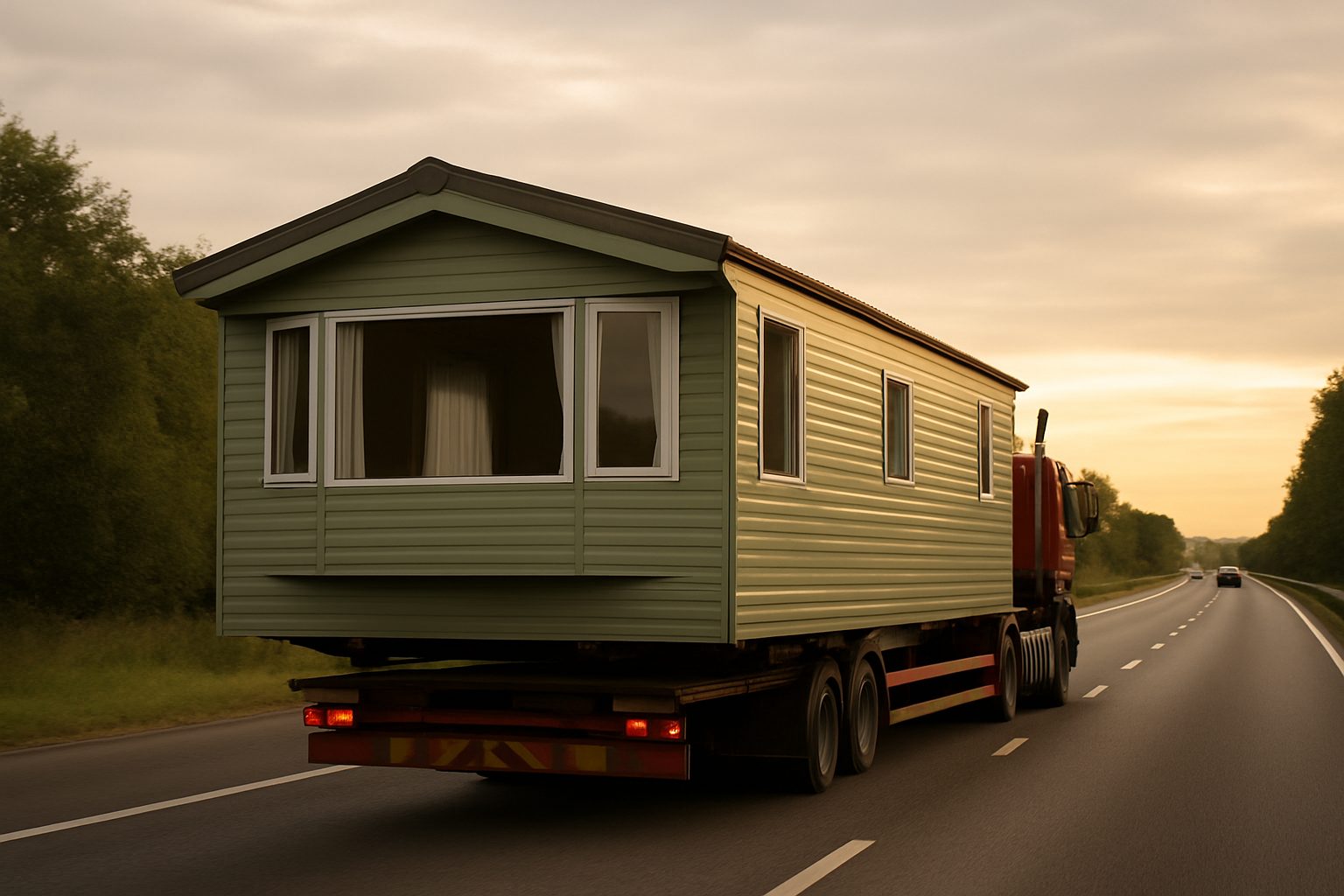
The Short Answer: Plan for 1–3 Days on the Road, but 2–4 Weeks Overall
Once a static caravan is loaded and on the road, most UK moves are completed in a single day. Longer hauls – say, Cornwall to Scotland – may require an overnight stop, stretching the driving element to two days. But the overall project from “yes, we’re moving” to “unit sited and level” typically takes two to four weeks when you factor in everything that needs to happen before and after the lorry arrives. If abnormal load permits or specialist escort arrangements are needed, allow the longer end of that window.
Stage by Stage: What Happens and How Long Each Part Takes
The table below gives a realistic guide to each stage. Times shown are working days unless stated otherwise.
| Stage | Who arranges it | Typical time needed |
|---|---|---|
| Survey, quote & booking confirmation | Static Caravan Movers | 1–3 days |
| Abnormal load ESDAL notification (loads >2.9m wide) | Static Caravan Movers | 2 clear working days’ notice minimum |
| Escort vehicle arrangement (loads >3.5m wide) | Static Caravan Movers | Booked alongside ESDAL; no extra calendar delay |
| Utility disconnection (gas, water, electric) | Customer / park engineer | Allow 3–10 days to book a qualified professional |
| Skirting & decking removal | Usually customer | Allow 1–2 days before collection |
| De-siting (jacking, lifting off stands) | Static Caravan Movers | Half a day to a full day on site |
| Transport – short haul (<100 miles) | Static Caravan Movers | Same day |
| Transport – long haul (>200 miles) | Static Caravan Movers | 1–2 days |
| Re-siting (positioning, jacking, levelling, making watertight) | Static Caravan Movers | Half a day to a full day on site |
| Utility reconnection (gas, water, electric) | Customer / park engineer | Allow 3–10 days to book a qualified professional |
Why the Permits Take at Least Two Working Days
Static caravans are too wide to tow and too heavy to carry on an ordinary lorry. A standard single unit – typically 10–12 feet wide – already exceeds the 2.9 m threshold that triggers an abnormal load notification under the Road Vehicles (Authorisation of Special Types) General Order. We submit that notification through the ESDAL system, which alerts the police, highway authorities and bridge owners along the planned route. The law requires a minimum of two clear working days between notification and the move.
Wider or heavier units need more lead time. If a unit is over roughly 3.5 m, an escort vehicle must travel with the convoy; if it exceeds 5 m, National Highways consent may be required and the notice period extends significantly. We handle route planning, marker boards, and escort coordination – but that planning time has to be built into your schedule. See our full guide to abnormal load permits & escorts for the detail on width thresholds.
The Part That Most Often Causes Delays: Utility Disconnection
Gas, water and electrical services must be disconnected and signed off by a suitably qualified professional before the unit can be moved – and reconnected the same way at the destination. This is work that the customer arranges; Static Caravan Movers does not carry out certified utility disconnection or reconnection, and we are not liable for it.
In practice, this is where timelines slip. A Gas Safe engineer, qualified electrician or park-appointed engineer may not be available for a week or more, particularly in the summer season when demand is high. Some parks insist that only their own maintenance team may disconnect services, which adds another diary-coordination step. Our advice: book your utility disconnection as soon as your move date is provisionally agreed – don’t wait until the transport is confirmed. See our Caravan Disconnect & Reconnect service page for more context on what is involved.
How Long Does De-Siting and Re-Siting Take on the Day?
Once the lorry is on site, our team works through the de-siting process: disconnecting the unit from any remaining fixings, jacking and lifting it clear of its stands or axles, then manoeuvring it onto the low loader. For a straightforward single-unit on a well-prepared pitch with good access, that typically takes around half a day. Re-siting at the destination – positioning the unit, jacking to the correct level, seating it on stands, checking level in all directions, and making it watertight – takes a similar amount of time.
Several things can extend those on-site hours:
- Tight or restricted access. If the lorry cannot get close to the pitch, more manoeuvring is needed. A quick conversation about access – gate widths, overhead cables, soft ground – before the move date avoids nasty surprises. See our guide on how static caravans are transported for more on low-loader requirements.
- Twin-unit homes. A twin-unit is moved as two separate halves, each on its own low loader, and rejoined and resealed on site. Expect the full move to take at least two days of site work rather than one. Read more in our guide to moving a twin-unit static caravan.
- Soft or uneven ground. If the pitch at either end is soft or unprepared, additional ground preparation may be needed before the unit can be safely levelled.
- Skirting and steps. If skirting or decking has not been removed before we arrive, it adds time on site. We can price removal but it is usually quicker for the customer to arrange it beforehand.
Does Distance Affect How Long the Move Takes?
Shorter moves – within the same county or a neighbouring one – are typically a single-day operation from de-siting to re-siting. Longer moves across England, into Wales, or up into Scotland, may require the crew to stop overnight, adding a calendar day. That said, distance alone rarely adds more than one extra day to the transport element. What it does affect is the planning window: for a long-distance move we need slightly more lead time to route-plan around motorway restrictions, low bridges, and any areas requiring advance notice to local authorities. Our long-distance transport guide covers this in more detail.
Despite being based in Rye, East Sussex, we cover the whole of mainland UK through a national network of transport and siting teams – so a move from, say, Norfolk to Cumbria is not a one-off special; it’s a routine job with competitive pricing. Transport starts from £950 for most moves.
A Realistic Move Timeline: What to Expect Week by Week
Here is a realistic example timeline for a single-unit move within mainland UK:
- Week 1 – planning: Contact us for a quote. Confirm destination park accepts the unit (check age limits – many parks restrict units over 10–20 years old). Provisionally agree a move date. Check pitch dimensions and access at both ends.
- Week 1–2 – utility booking: Book your Gas Safe engineer, qualified electrician, and any park-appointed engineers for disconnection at the origin and reconnection at the destination. This is the step most likely to set the overall schedule.
- Week 2–3 – pre-move preparation: Clear personal belongings, drain water systems, remove or secure all loose items inside. Arrange skirting and decking removal. Confirm access arrangements with both parks.
- Move day(s): Utility disconnection confirmed; our team arrives to de-site, load, and transport. Re-siting and levelling at destination completed the same day or following day for longer hauls.
- Post-move week: Utility reconnection by your qualified professionals. Skirting refitted if required. You’re back on site.
How to Prepare to Keep Your Move on Schedule
The biggest cause of a delayed move is not the transport – it is things that should have been sorted beforehand. A full pre-move checklist is in our dedicated guide on how to prepare a static caravan for transport. In summary:
- Confirm with the destination park that your unit’s age, width and specification are acceptable before committing to the move.
- Book qualified tradespeople for utility disconnection and reconnection as early as possible – do not assume you can do this in a day or two.
- Clear the unit of all loose items, empty water tanks and pipes, and remove gas cylinders.
- Arrange removal of skirting, decking and any external fixings that would catch on the low loader.
- Check gate widths, overhead obstructions and ground conditions on both pitches and flag anything unusual to us when booking.
- Pay the 50% deposit to secure your move date; balance is due when the unit is loaded.
Frequently Asked Questions
Can a static caravan be moved in a single day?
Yes, for most short-to-medium distance moves within mainland UK – typically under 150 miles – the de-siting, transport and re-siting can all be completed within one day, provided the unit is ready, services have been disconnected, access is clear and the ESDAL notification period has been satisfied. Longer distances or wider units may require an overnight stop.
How far in advance do I need to book?
We recommend contacting us at least three to four weeks before your intended move date. This gives time to arrange a survey quote, satisfy the two-clear-working-days’ ESDAL notice requirement, and – most importantly – gives you enough lead time to book your utility disconnection and reconnection professionals, who are often the bottleneck.
How long does it take to move a twin-unit home?
A twin-unit park home or mobile home is transported as two separate halves, each requiring its own low loader. De-siting, transport, re-siting and rejoining the two halves – including resealing the join and making the unit watertight – typically spans at least two days of site work, plus transport time. Overall project timelines for twin-units are generally at the longer end of the two-to-four-week window.
Does the ESDAL notification delay my move?
Not if it is factored in from the start. The law requires two clear working days’ notice for loads over 2.9 m wide. As virtually all static caravans exceed this width, we submit the ESDAL notification as part of our standard booking process. As long as your move date is planned at least a week ahead, the permit process runs in the background and does not add to your overall timeline.
Who is responsible for disconnecting the gas and electricity?
You are. Gas, water and electrical disconnection must be carried out and signed off by a suitably qualified professional – a Gas Safe registered engineer for gas, a qualified electrician for electrics. Some parks require that only their own maintenance team may carry out disconnection. Static Caravan Movers does not carry out certified utility disconnection or reconnection and is not liable for it. We strongly recommend booking these tradespeople as soon as your move date is agreed.
Can access problems on the day delay the move?
Yes, significantly. If a gate is too narrow for the low loader, or there is soft ground or an overhead obstruction that wasn’t flagged in advance, the team may need to spend additional time manoeuvring or problem-solving on site. We always ask about access when taking a booking – it is worth measuring gate widths and checking for any low cables or branches before the move day.
What happens if the destination park isn’t ready for the unit?
If the pitch at the destination has not been prepared – for example the hardstanding is not complete, or the pitch has not been signed off by the park manager – the unit cannot be sited. This can mean additional waiting time and potentially a return journey. Confirming pitch readiness with the destination park, including any age-limit or specification checks, before the lorry is booked is essential.
Does the time of year affect how long a move takes?
It can. Summer and bank holiday periods are the busiest time for static caravan transport, meaning utility engineers and siting teams can have longer diaries. Routes through popular tourist areas may also have road restrictions during peak season. Moving in spring or autumn generally gives more scheduling flexibility and can make it easier to secure all the tradespeople you need within a tight window.
Related Guides & Services
- How to Move a Static Caravan to Another Site: Step-by-Step UK Guide
- How to Prepare a Static Caravan for Transport (Checklist)
- Static Caravan Abnormal Load Permits & Escorts Explained (UK Law)
- How Much Does It Cost to Move a Static Caravan? UK Price Guide 2026
- Moving a Twin-Unit Static Caravan: How It Works
- Static Caravan De-siting & Re-siting