
Many people look at a static caravan or park home and wonder whether it could become a permanent address – somewhere to live through January frosts and February storms just as easily as a sun-soaked August weekend. The honest answer is: yes, you can live in a static caravan all year round in the UK, but only if you have the right home, on the right park, with the right paperwork in place. Get any one of those three wrong and you could find yourself in breach of planning law, unable to get home insurance, or suddenly cold in a caravan that was never built for winter.
Holiday Park vs Residential Park: The Crucial Difference
This is the single most important distinction to understand. A holiday park holds a seasonal licence from the local authority, typically permitting occupation for 10 or 11 months of the year – and the council can insist you demonstrate you have a principal home elsewhere. Using a holiday-licensed pitch as your only address is a breach of planning law and can result in enforcement action. Learn more about the difference between static caravans and park homes.
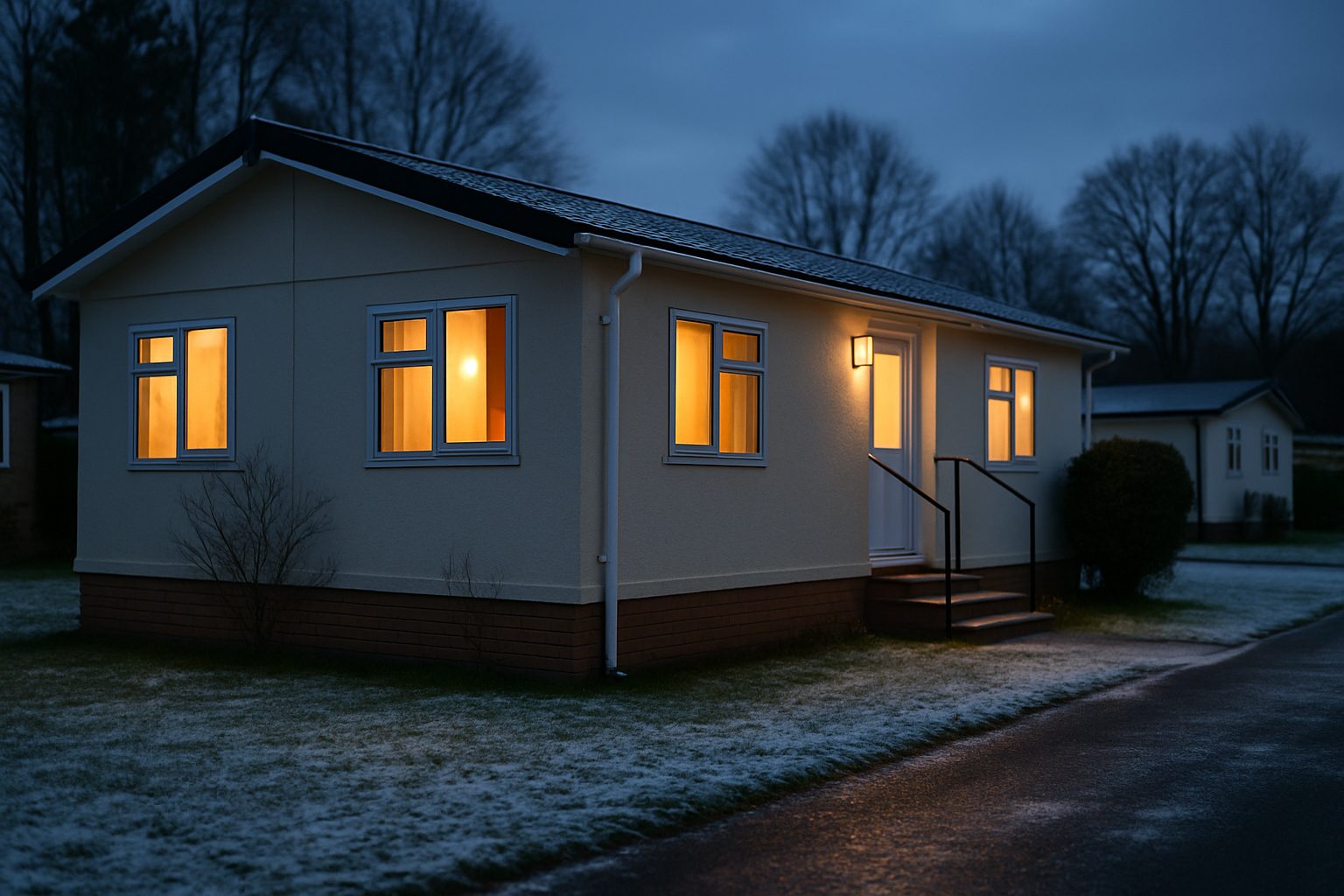
A residential park – sometimes called a park home site – holds a permanent residential licence and its residents pay council tax (almost always Band A, the lowest band). Pitch fees apply year-round, and park rules govern matters such as subletting, pets and alterations to the home. This is the legal route to full-time living in a static caravan or park home.
Does the Caravan Itself Need to Meet a Special Standard?
Yes – and this catches a lot of buyers out. Holiday caravans are built to the EN 1647 leisure standard, which is adequate for mild-weather use but not designed for a British winter. If you plan to live in a static caravan all year, the unit needs to be built to BS 3632, the British Standard for residential park homes and year-round occupation.
BS 3632 requires significantly higher insulation values (walls, floor and roof), thermally efficient double-glazed windows, a central heating system capable of maintaining warmth in subzero temperatures, and improved vapour and moisture controls. The standard was revised in 2023 (BS 3632:2023) with further improvements to energy efficiency – well worth checking when comparing older second-hand units with newer stock. Read our checklist for buying a second-hand static caravan for what to look for before you commit.
What Does Year-Round Living Actually Cost?
The purchase price of a BS 3632 residential home is one number; the ongoing monthly outgoings are another conversation entirely. Here is a realistic breakdown of what to budget for:
| Cost | Typical range / notes |
|---|---|
| Pitch fee | £150–£400+ per month depending on park, location and facilities. Reviewed annually – rises are common. |
| Council tax | Band A in most cases. Roughly £80–£130/month for a single adult (25% discount applies if you live alone). |
| Gas / LPG | Most residential parks use LPG or oil rather than mains gas – typically more expensive than mains gas. Budget carefully. |
| Electricity | Some parks buy in bulk and pass on competitive rates; others bill at standard domestic tariffs. Confirm before buying. |
| Home insurance | Specialist residential park home insurance is essential – standard contents or buildings policies will not cover a static. |
| Maintenance | Annual servicing of heating, roof checks, skirting, and general upkeep. Properly maintained, a static can last 15–30+ years. |
Note that stamp duty land tax does not apply to park home purchases – a meaningful saving at higher price points compared with buying a house. However, unlike bricks-and-mortar property, park homes do not automatically appreciate in value and most lenders will not offer a conventional mortgage on them.
Age Limits, Park Rules & What to Check Before You Buy
Residential parks are entitled to set minimum age limits for residents – many (though not all) sit at around 45 or 50, reflecting a community built around retirement living. Always confirm the age policy before reserving a pitch or purchasing a home. Other key checks include:
- Caravan age limits on the park. Many parks operate a 10–20 year rolling age policy – once your home exceeds the limit the park can require you to replace it. Ask for this in writing before you sign.
- Pitch fee terms. The Mobile Homes Act 1983 (as amended) gives residential park home occupiers legal rights, including a right to sell their home and a requirement that the park owner gives 28 days’ written notice of any pitch fee change. Our guide to site fees and ground rent explains what is and is not within the park’s power to change.
- Site licence conditions. These are issued by the local authority and govern spacing between homes, fire safety, and amenities. Ask to see the licence before committing.
- Gas and electrical certificate requirements. Many parks require up-to-date Gas Safe and NICEIC/NAPIT electrical certificates – you will need a qualified engineer to provide these, not the transport company.
- What happens when you want to sell? Parks typically take a commission (usually 10%) on the sale price when you sell a residential park home in England. Our guide to selling a static caravan covers your options.
Moving Into a Residential Park: What the Transport Process Looks Like
Whether you are delivering a newly purchased home to a residential park, or moving an existing static caravan from one site to another, the transport process follows the same specialist route. Static caravans cannot be towed – they are carried on low-loaders as abnormal loads, with ESDAL notification, route planning, marker boards and – for units over roughly 3.5m wide – an escort vehicle. We handle all of that. See our guide to static caravan sizes, widths and weights to understand how dimensions affect the permit and escort requirements.
Transport starts from £950 for most moves, with siting and levelling at the destination typically adding £300–£1,200 for a single unit, or £4,000–£5,000 for a larger twin-unit or specialist home that arrives in two halves and must be rejoined and resealed on site. Our full UK price guide for 2026 explains what drives the cost up or down.
One thing to plan carefully: you are responsible for arranging the certified disconnection and reconnection of gas, water and electricity – this must be carried out and signed off by qualified engineers (Gas Safe for gas, an approved electrician for electrics). Some parks insist that only their own engineers disconnect services. Static Caravan Movers handles the lift, transport, levelling and making-watertight – but we do not carry out or certify utility connections, and we are not liable for that work. Our transport preparation checklist covers exactly what needs to be arranged before your move day.
Can You Live in a Static Caravan on Private Land?
If you own a piece of land and want to live in a static caravan on it permanently, you will almost certainly need planning permission. Temporary use for up to 28 days a year generally does not require consent, but permanent or long-term residential occupation does. Permitted development rights rarely extend to year-round residential caravans. Our guide on moving a static caravan onto private land walks through the planning rules in detail. A separate but related question applies if you are thinking of retiring to a more rural plot – check with your local planning authority before you purchase or transport anything.
Is Year-Round Static Caravan Living Right for You?
For the right person, in the right home, on the right park, it can work extremely well – lower council tax, no stamp duty, potentially lower purchase price than a conventional house, and (on many residential parks) a genuinely close-knit community. The trade-offs are real too: limited mortgage options, annual pitch fee increases, age limits on both the park and the caravan, LPG heating costs in winter, and a resale market that does not behave like the housing market.
Go in with clear figures, read the pitch agreement carefully, get independent legal advice before signing, and make sure any caravan you are considering carries the BS 3632 residential standard. If you already know where you want to be and need a home transported and sited, we can help with the next step.
Frequently Asked Questions
Can I legally live in a static caravan on a holiday park all year?
No. A holiday park holds a seasonal licence, not a residential one. Using a holiday pitch as your only address breaches planning law. Some parks permit 11 or 11.5 months’ occupation, but they can require you to prove you have an alternative primary address. Full-time year-round living requires a residential park licence.
What is BS 3632 and do I need it?
BS 3632 is the British Standard for residential park homes built for year-round occupation. It sets minimum requirements for insulation, double glazing, heating capacity and moisture control. If you want to live in a static caravan through a British winter, you need a unit built to BS 3632 – not the leisure standard EN 1647, which holiday caravans use. The 2023 revision (BS 3632:2023) introduced further energy efficiency improvements.
Do I pay council tax if I live in a static caravan?
Yes. Residents on a residential park pay council tax, almost always at Band A – the lowest band. If you live alone you are entitled to a 25% single-person discount. Holiday caravans, where the caravan is not your sole or primary residence, are not subject to council tax in the same way.
Can the park owner increase my pitch fee every year?
Yes – pitch fees are reviewed annually and rises are common. Under the Mobile Homes Act 1983 (as amended), the park owner must give at least 28 days’ written notice of any change. Residential park home occupiers have legal protections, including the right to challenge unreasonable increases through a tribunal. Our guide on rising pitch fees covers your options, including moving to a more competitively priced park.
Can the park force me to replace my caravan because of its age?
Many parks operate age limit policies – typically 10–20 years – after which they can require you to replace or remove your home. This is an important term to check in the written statement (pitch agreement) before you buy. If you face a forced move due to a site closure or park policy, our guide on moving after a site closure or eviction explains what your rights are and how the transport process works.
Who disconnects the gas and electricity before the caravan is moved?
You do – or rather, you arrange for qualified engineers to do it. Gas disconnection and reconnection must be carried out by a Gas Safe registered engineer; electrical work by an approved competent electrician. Some parks insist that only their own maintenance team disconnects services. Static Caravan Movers handles the transport, lift, levelling and making-watertight at the destination, but we do not carry out certified utility connections and we are not liable for that work.
How much does it cost to move a static caravan to a residential park?
Transport starts from £950 for most moves. De-siting at the current location and siting at the destination typically adds £300–£1,200 for a standard single unit, or £4,000–£5,000 for a larger, twin-unit or specialist home. The final figure depends on distance, the width of the caravan (which affects permits and escorts), site access at both ends, and whether skirting or decking needs to be removed. See our detailed price guide for a full breakdown.
Can I move my static caravan to a residential park anywhere in the UK?
Yes. We cover all of mainland UK via a trusted national network of transport and siting teams. Long-distance moves – say, from Kent to Scotland – are handled on the same basis as a short local move and priced competitively, not as one-off specials. Our long-distance transport guide explains how we plan routes and manage abnormal load permits across different regions.
Related Guides & Services
- Static Caravan vs Park Home vs Mobile Home – what’s the difference?
- Buying a Second-Hand Static Caravan: Checklist & Delivery
- Static Caravan Site Fees & Ground Rent Explained
- Pitch Fees Rising? When to Move Your Static Caravan
- How Much Does It Cost to Move a Static Caravan? UK Price Guide 2026
- Moving Your Static Caravan After a Site Closure or Eviction