
You’ve seen them on coastal clifftops, tucked into woodland parks and spread across riverside meadows all over the UK – but what exactly is a static caravan, how is it different from a touring caravan or a park home, and what does it actually mean to own one? Whether you’re thinking of buying your first holiday home, considering a residential move, or simply trying to understand what you’d be taking on, this guide covers everything you need to know in plain language.
The Basic Definition
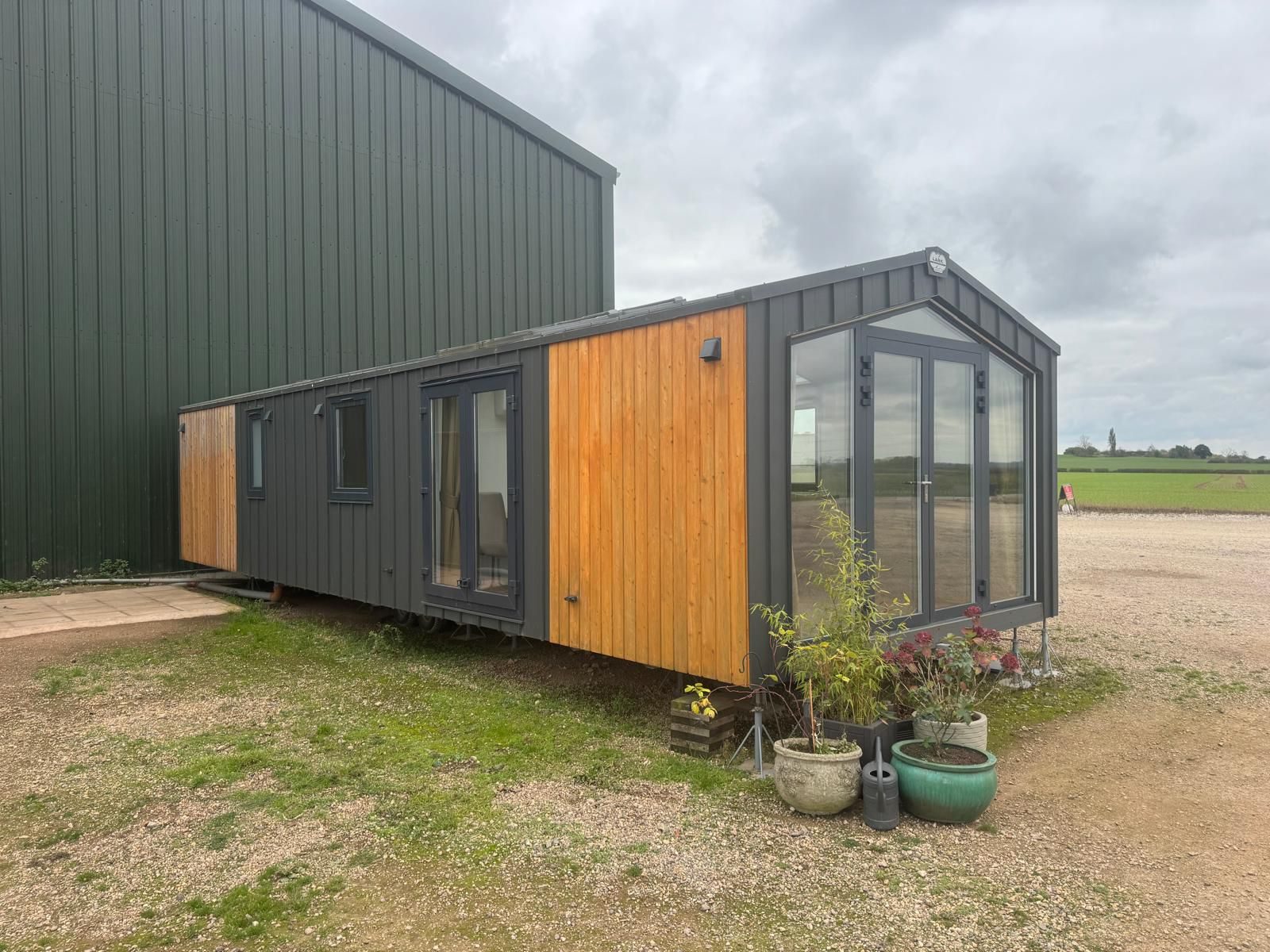
A static caravan is a prefabricated, factory-built home that is transported to a fixed location on a specialist vehicle and then sited – levelled and connected to services – where it stays, sometimes for decades. Unlike a touring caravan, which you hitch to a car and take on holiday, a static is never towed on the road once it’s in place. It has no engine and no tow bar; it’s a home that happens to sit on a chassis rather than a concrete foundation.
The term “static caravan” is used loosely in everyday speech to cover several distinct product types. Understanding the differences matters, especially if you’re planning to move one to a new site or buy one second-hand.
Types of Static Caravan
Holiday Homes (EN 1647)
Built to the European standard EN 1647, holiday-grade static caravans are designed for seasonal use – typically on parks open for nine or ten months of the year. Their insulation is lighter than a residential-spec unit, which is fine when the park closes in winter. Most holiday parks operate an age-limit policy (commonly ten to twenty years from manufacture date) after which the unit must be replaced or removed, so the age of a second-hand model matters a great deal. If you’re buying used, always check the park’s current age-limit rules before you commit – our buying a second-hand static caravan checklist walks you through every step.
Residential Park Homes (BS 3632)
A park home – also called a mobile home in legal terms – is built to British Standard BS 3632, the residential specification. The extra insulation, ventilation, and energy-efficiency requirements bring it much closer to a conventional house. Residential parks have a licence that allows permanent, year-round habitation; you can register it as your main address, claim it as your primary residence, and live there 365 days a year. If you want to understand how these labels relate to each other in more depth, our guide to static caravan vs park home vs mobile home covers the legal and practical distinctions.
Twin-Unit Homes
The largest static homes – sometimes marketed as lodges – are built in two halves that are transported separately and bolted, sealed and rejoined on site. Twin-unit homes can be very spacious indeed, with multiple bedrooms, full kitchens and living rooms that feel closer to a house than a caravan. Moving a twin-unit is a more involved operation because each half is an abnormal load in its own right; see our dedicated guide on moving a twin-unit static caravan for full details.
Typical Sizes and Weights
Static caravans come in a wide range of sizes. The table below gives a general idea of what to expect – exact dimensions vary by manufacturer and model year. For a full breakdown with transport implications, see our static caravan sizes, widths & weights guide.
| Type | Typical width | Typical length | Approximate weight |
|---|---|---|---|
| Standard single | 10–12 ft (3.0–3.7 m) | 28–40 ft (8.5–12 m) | 4–8 tonnes |
| Wide single / lodge | 13–15 ft (4.0–4.6 m) | 35–45 ft (10.7–13.7 m) | 7–12 tonnes |
| Twin-unit (each half) | 10–12 ft per half | 28–45 ft per half | 4–8 tonnes per half |
Width is the critical measurement for transport. Over roughly 2.9 m, a unit becomes an abnormal load requiring ESDAL notification with at least two clear working days’ notice. Over about 3.5 m an escort vehicle is usually needed; over 5 m, National Highways consent or police involvement may apply. A reputable transport company handles all of this – permits, route planning, marker boards and escorts.
How a Static Caravan Is Transported and Sited
One thing that surprises many people: you cannot tow a static caravan. There is no tow hitch and the structure is not designed to be pulled behind a car or tractor. Statics are carried – loaded onto a specialist low-loader and driven to site under abnormal-load regulations. See our guide on why statics need specialist transport for more.
Once on site, “siting” the unit means: jacking it off the transport vehicle, positioning it precisely on the pitch, levelling it on stands or axles, and – for a twin-unit – bolting and sealing the two halves together so the join is weathertight. The transport and siting company handles all of this. What they do not do is connect or certify the gas, water, and electrical services – that work must be carried out and signed off by a suitably qualified professional, which the owner arranges. Some parks insist that only their own contractors may disconnect or reconnect services, so always check with the park first.
Owning a Static Caravan: the Practical Realities
If you own a static on someone else’s land you pay a pitch fee (also called a site fee or ground rent) to the park operator. Fees are reviewed annually and tend to rise – our guide to static caravan site fees & ground rent explains what they cover and what to check before signing. A well-maintained unit can last fifteen to thirty years or more, though holiday-park age limits often prompt owners to upgrade before the unit wears out.
Other things worth knowing:
- You usually own the unit but not the land – the park retains the pitch.
- Residential parks operate under the Mobile Homes Act 1983 (as amended), giving residents legal protections around pitch agreements and sale rights.
- Holiday caravans cannot be used as a main or sole residence – that is a planning condition, not just park rules.
- Planning permission rules vary – see our guide on planning permission for a static caravan.
- Skirting, decking and steps are typically the owner’s responsibility to remove before a move; your transport company may be able to price this, but it adds time and cost.
Can You Move a Static Caravan Once It’s Sited?
Yes – and it’s more common than people think. Owners move when pitch fees rise too steeply, a park closes, or they want a fresh location. The key facts:
- Transport starts from £950 across mainland UK. Long-distance moves are competitively priced – specialist hauliers cover the whole country, not just their local area.
- De-siting and re-siting typically costs £300–£1,200, rising to £4,000–£5,000 for larger, twin-unit or specialist homes.
- Certified utility disconnection and reconnection must be arranged by the owner. The transport company moves the unit; it cannot sign off the gas or electrics.
- Check the destination in advance: access width for the low-loader, overhead cables, the pitch condition, and whether the receiving park accepts the unit’s age and spec.
For the full picture, see our step-by-step guide to moving a static caravan and our UK price guide for 2026.
Frequently Asked Questions
What is the difference between a static caravan and a touring caravan?
A touring caravan is designed to be hitched to and towed by a car; you move it whenever you travel. A static caravan is a permanently sited, factory-built home with no tow hitch. It stays in one place and must be transported on a specialist low-loader if it ever needs to move. Static caravans are considerably larger and heavier than tourers.
Is a static caravan the same as a park home?
Not quite. Both are factory-built homes on a chassis, but a park home is built to British Standard BS 3632 (the residential specification) for permanent, year-round habitation. A standard holiday static is built to the lighter EN 1647 standard for seasonal use. The legal rights attached to each are meaningfully different.
Can you live in a static caravan all year round?
On a residential park with the right licence, yes. On a holiday park, no – you are legally required to vacate for part of the year as a condition of the park’s planning permission, even if the unit itself is well-insulated. See our guide on living in a static caravan all year round for the full picture.
How wide is a static caravan?
Most single-unit statics are 10–12 ft (roughly 3.0–3.7 m) wide. Wider models – sometimes called lodges – can reach 13–15 ft (4.0–4.6 m). Any unit wider than roughly 2.9 m is classified as an abnormal load for transport purposes, which means specialist permits and notifications are required. This is handled by the transport company, not the owner.
Can a static caravan be moved from one park to another?
Yes, in most cases. The unit must be assessed for its condition and the receiving park must be willing to accept it (age limits and specification checks apply). The move involves de-siting, transport on a low-loader, and re-siting at the new location. You will also need to arrange certified utility disconnection before the move and reconnection once it’s in place. Read our guide on moving a static caravan to another site for the rules.
What is a twin-unit static caravan?
A twin-unit is a large static home built and transported in two separate halves, each of which is an abnormal load. On site, the two halves are positioned side by side, bolted together, and the join is resealed to make the whole structure weathertight. Twin-unit homes are spacious and house-like inside but are more expensive and logistically complex to move than single-unit caravans.
What does “siting” a static caravan involve?
Siting means lifting the unit off the transport vehicle, positioning it on the pitch, and levelling it precisely on stands or axles. For twin-units, the two halves are joined and resealed. The siting company can refit skirting and steps on request. Gas, water, and electrical connections are not included – those must be signed off by a qualified professional arranged by the owner.
How much does it cost to move a static caravan?
Transport starts from £950 for most single-unit moves on mainland UK. De-siting and re-siting adds £300–£1,200 for standard homes, rising to £4,000–£5,000 for large, twin-unit or specialist units. Exact costs depend on distance, access at both ends, the size of the unit, and whether any permit escorts are needed. The best way to get an accurate figure is to call us with the unit’s dimensions and the move details.