
“Is it a static caravan, a park home, or a mobile home?” – it’s one of the most common questions people ask when they start exploring leisure or residential living outside a traditional house. The three terms are used almost interchangeably in conversation, yet they refer to quite different products with different legal protections, build standards, and practical implications – including how they’re moved when the time comes.
What Do the Three Terms Actually Mean?
All three fall under the legal umbrella of “caravan” as defined by the Caravan Sites Act 1968 – a structure designed or adapted for human habitation that can be moved from place to place (whether by being towed, or transported on a motor vehicle or trailer). In practice, though, people use the words to mean quite distinct things.
Static Caravan
A static caravan is a factory-built unit intended primarily for holiday or leisure use. It sits permanently on a pitch at a holiday or leisure park, is connected to services, and is not designed or licensed for year-round residency. Most are built to the European standard EN 1647, which governs holiday accommodation. Typical dimensions run from around 28–40 ft in length and 10–12 ft in width; twin-unit models can be considerably wider. Parks that site them usually impose an age limit – commonly 10–20 years – after which the unit must be replaced or removed, even if it’s structurally sound. A well-maintained static caravan can last 15–30 years or more, so the park’s policy is often the binding constraint, not the caravan itself.
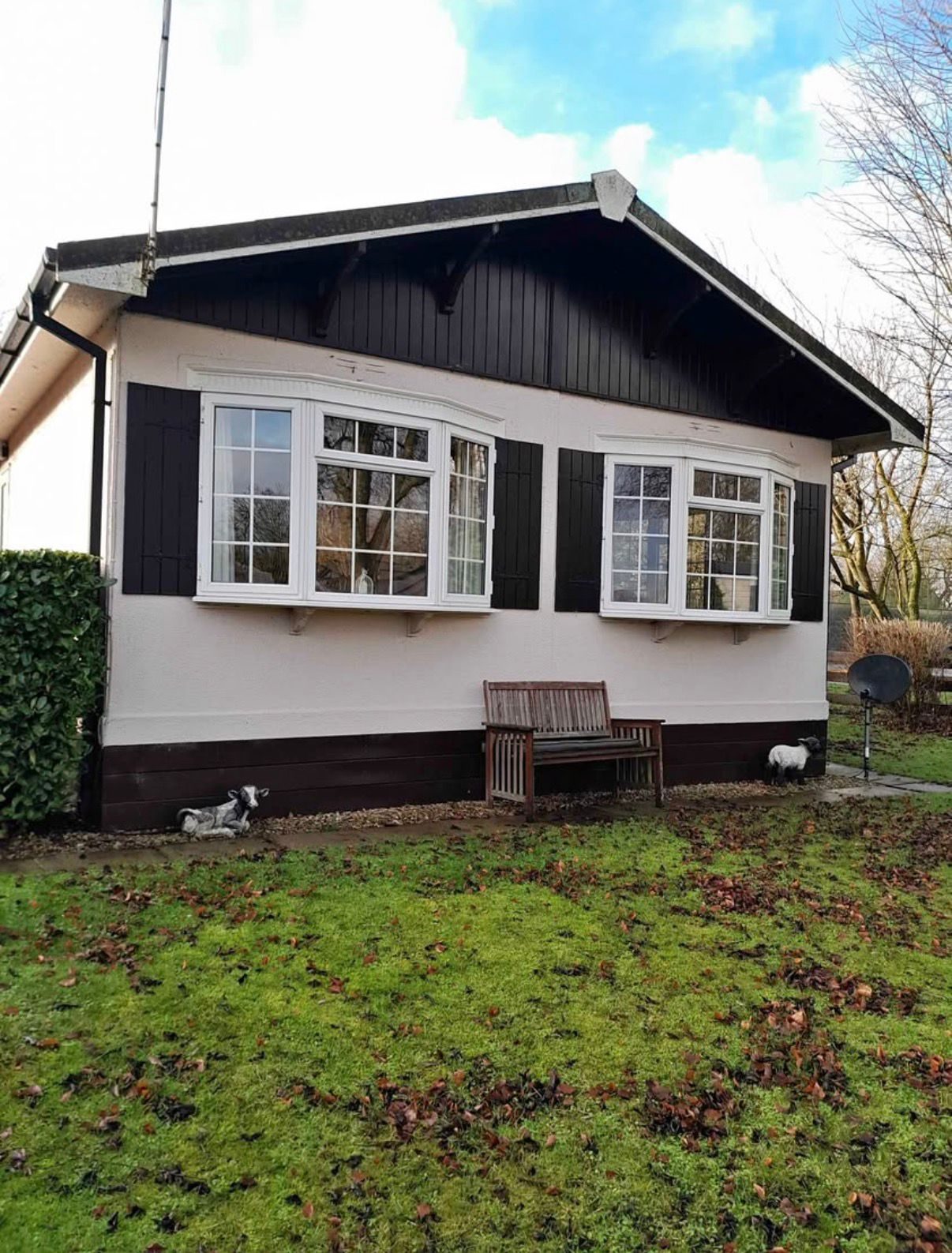
Park Home
A park home is a factory-built unit built to British Standard BS 3632, the residential specification. BS 3632 imposes significantly higher standards for insulation (at least 65 mm in walls and floors, 100 mm in the roof), energy efficiency, and ventilation than EN 1647, making the unit suitable for year-round, full-time occupation. Park homes are sited on residential parks that hold the appropriate site licence, and their occupiers benefit from security of tenure and other protections under the Mobile Homes Act 1983 (as amended by the Mobile Homes Act 2013). The Act means you cannot be evicted without a court order – a meaningful legal safeguard that static-caravan holiday owners do not have.
Mobile Home
“Mobile home” is largely an older or colloquial term – and a slightly misleading one, since the unit is not designed to be moved regularly. In common UK usage today it usually refers to a residential-spec unit used as a full-time home, and is often used interchangeably with “park home”. Government guidance and legislation (including the Mobile Homes Act itself) uses the phrase “mobile home” to describe what most of us now call a park home. For transport purposes, moving a park home or mobile home involves the same specialist low-loader equipment and logistics as moving a static caravan.
Side-by-Side Comparison
| Feature | Static Caravan | Park Home / Mobile Home |
|---|---|---|
| Build standard | EN 1647 (holiday) | BS 3632 (residential) |
| Typical use | Holiday / leisure | Full-time residence |
| Year-round occupation | Usually not permitted | Yes – designed for it |
| VAT on purchase | 5% charged | Exempt (no 5% VAT) |
| Legal protection (tenure) | Standard consumer law only | Mobile Homes Act 1983 |
| Park age limit | Commonly 10–20 years | Less common; varies by park |
| Insulation (roof) | Lower EN 1647 minimum | 100 mm minimum (BS 3632) |
| Transport method | Specialist low loader | Specialist low loader |
What About Lodges & Residential-Spec Caravans?
A further source of confusion is the “lodge” or “holiday lodge”. These are typically built to a higher specification than a standard static caravan and may or may not meet BS 3632. Some manufacturers build units to BS 3632 but market them for both leisure and residential use; the deciding factor is always the park licence, not the unit alone. A BS 3632 unit on a holiday park with a seasonal licence does not confer residential rights – if you want full-time occupancy with legal protection, the park itself must hold a residential site licence.
Does the Difference Matter When It Comes to Moving?
From a transport and siting perspective, the distinction matters mainly in terms of size and weight. Park homes built to BS 3632 are often larger and heavier than a standard 10×32 ft holiday static. Widths of 12 ft or more are common; twin-unit park homes (two halves joined on site) push total widths to 20–24 ft when reassembled.
None of these units can be towed – statics and park homes alike must travel on a specialist low loader. Any unit wider than approximately 2.9 m becomes an abnormal load in law, requiring ESDAL notification to relevant highway authorities at least two clear working days before the move. Units over roughly 3.5 m wide typically need an escort vehicle; beyond 5 m the move may require National Highways consent or police involvement. Static Caravan Movers handles all permits, notifications, route planning, marker boards, and escorts – you don’t need to engage separately with ESDAL or the police. You can read more in our guide to abnormal load permits for static caravans and park homes.
For twin-unit park homes, the move involves transporting each half separately on its own low loader, then rejoining and resealing the two halves on the destination pitch. Our guide to moving a twin-unit static caravan walks through exactly how that works.
Practical Implications for Owners
Pitch fees and park rules
Whether you own a static caravan on a holiday park or a park home on a residential park, you will pay an annual pitch or site fee to the park operator. These fees cover the rental of the land, maintenance of shared facilities, and sometimes utility connections. They are reviewed – and almost always rise – annually. Our guide to static caravan site fees & ground rent explains what’s typically included and what questions to ask before signing up. If fees are rising faster than expected, it’s worth reading about when rising pitch fees make it worth moving your caravan.
Utility connections: who is responsible?
This is an area where many owners are caught out. Whether you’re moving a static caravan or a park home, the certified disconnection and reconnection of gas, water, and electricity must be carried out by a suitably qualified professional – and that’s something the owner arranges, not the transport company. Some parks insist that only their own approved contractors may disconnect or reconnect services. Check your park’s rules before booking transport. Static Caravan Movers does not carry out certified utility work and is not liable for it; our siting and de-siting scope covers lifting, positioning, levelling on stands or axles, rejoining and resealing twin-unit halves, making the unit watertight, and refitting skirting or steps on request.
Can the lorry reach the pitch?
Access is one of the most common practical concerns, particularly on older residential parks with tight lanes or low overhead cables. Our team carries out a route and access check before every move – it’s part of the planning process, not an afterthought. If you’re considering buying a second-hand unit and having it delivered, our buying a second-hand static caravan checklist covers access questions alongside everything else worth checking before you commit.
Transport & Siting Costs at a Glance
Costs vary with distance, unit size, access conditions, and whether permits or escorts are required. As a guide:
- Transport starts from £950 for most moves. Long-distance hauls across mainland UK are handled through our national network of specialist transport and siting teams, so they remain competitively priced rather than one-off specials.
- De-siting & re-siting (lift off, position, level, make watertight) typically runs £300–£1,200 for a standard single unit, and £4,000–£5,000 for larger, twin-unit, or specialist park homes.
- A 50% deposit is required to reserve the date; the balance is due when the unit is loaded.
For a detailed breakdown see our full UK price guide for moving a static caravan or the dedicated park home and mobile home transport cost guide.
Frequently Asked Questions
Is a park home the same as a mobile home?
In practice, yes – the terms are used interchangeably today. “Mobile home” is the older phrase and remains the legal term used in the Mobile Homes Act 1983, but the industry has largely settled on “park home” for residential units built to BS 3632 and sited on licensed residential parks.
Can I live in a static caravan all year round?
Usually not – most holiday and leisure parks are licenced for seasonal use only, commonly 10 or 11 months of the year. To live somewhere full-time in this type of accommodation you need either a park with a residential licence (where units must meet BS 3632) or, in some cases, planning permission on private land. Our guide to living in a static caravan all year round sets out the rules in full.
Do park homes have the same age limits as static caravans?
Age limits are far more common on holiday parks than on residential parks. Many residential parks have no blanket age restriction on BS 3632 units – because the home is someone’s full-time residence, an arbitrary end-date would conflict with security of tenure under the Mobile Homes Act. That said, individual park rules vary, so always check the written statement of terms before purchasing.
Can a static caravan or park home be moved to private land?
It’s possible in some circumstances, but planning permission and a site licence will almost certainly be required if the unit is to be used for habitation rather than storage. Our guide to placing a static caravan on private land covers the planning rules in detail.
Who arranges gas, water, and electricity disconnection before the move?
The owner does. Certified disconnection and reconnection of all utilities must be carried out by a suitably qualified professional before transport begins. Some park operators insist on using their own approved contractors. Static Caravan Movers does not carry out utility work and cannot be held liable for it – we handle the transport, siting, levelling, and (for twin-units) the rejoining and resealing.
Does it cost more to move a park home than a static caravan?
It can do, primarily because park homes built to BS 3632 are often larger and heavier, and twin-unit models require two separate transports plus rejoining on site. De-siting and re-siting costs for twin-unit or specialist homes typically run £4,000–£5,000. For a standard single unit the range is £300–£1,200 for the siting element, with transport starting from £950. The best way to get an accurate figure is to call us with the unit dimensions and both addresses.
Does Static Caravan Movers cover the whole of the UK?
Yes. Although we’re based in Rye, East Sussex, we cover all of mainland UK through a trusted national network of specialist transport and siting teams. Long-distance moves are not one-off specials – they’re part of our regular operation and are priced accordingly. See our long-distance static caravan transport guide for more detail, or check areas we cover.